Deep Dive: The Ultimate “Physical Exam” for a Modern Toilet—Behind the Scenes of the Inspection Process
In the sanitary ware industry, transforming raw clay into a flawless ceramic toilet involves dozens of complex procedures. For a professional manufacturer like Meizhi Ceramics, strict Quality Control (QC) is not just a production standard—it is a pledge of reputation and reliability.
How does a high-quality bathroom toilet survive the gauntlet of inspections to become a durable fixture in a modern home? Here is an inside look at the rigorous QC journey.
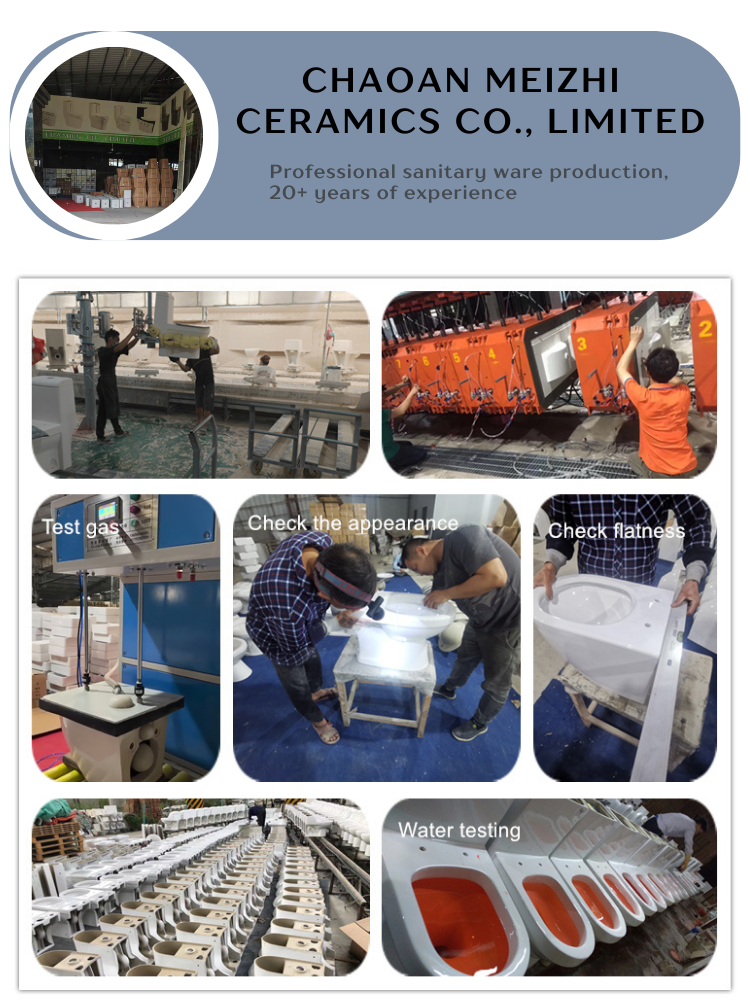
1. Aesthetic Inspection: More Than Just Surface Level
For a modern toilet, a flawless finish is its first competitive advantage. QC inspectors rigorously scan every product under high-intensity lighting (800-1000 lux) to ensure perfection.
- Glaze Smoothness: Inspectors hunt for minute defects such as pinholes, black spots, "orange peel" textures, or unglazed areas. Meizhi Ceramics places extreme emphasis on a smooth, uniform glaze, which is crucial for preventing stain buildup over years of use.
- Color Consistency: Every unit in a batch must maintain an identical tone. This ensures that under bright bathroom lighting, there is no visual chromatic aberration between the tank and the bowl.
- Deformation Check: Ceramics can warp during high-temperature firing. Using professional level gauges, inspectors measure the flatness of the base and the tank rim to ensure the unit sits rock-steady after installation.
2. Core Functional Testing: The Heart of the Toilet
If the design is the body, the flushing performance is the soul of a ceramic toilet. Functional testing covers critical performance indicators:
- Flushing Performance Test: This is the ultimate pass/fail test. Inspectors use standard testing media (such as plastic balls, sponges, or soybean paste) to simulate waste. The toilet must clear the bowl in a single flush with no residue, verifying its power and efficiency.
- Water Seal Depth & Replenishment: A qualified bathroom toilet must maintain a specific water seal height (typically 50mm+) to effectively block sewer odors. The test also verifies that the water seal replenishes correctly after every flush.
- Leakage & Vacuum Test: To eliminate invisible risks, units undergo vacuum or high-pressure water testing. This detects "hairline cracks" inside the trapway or body that are invisible to the naked eye, preventing future leaks.
3. Structure & Accessories: Details Determine Durability
As the design of the modern toilet becomes more integrated and intelligent, the precision of its components is paramount.
- Seat Cover Fit: Inspectors check the alignment of the seat cover with the ceramic body. They also verify the "soft-close" mechanism to ensure a quiet, smooth descent without slamming.
- Mechanism Lifecycle: Flush valves and fill valves undergo endurance testing (often tens of thousands of cycles) to guarantee precise water control under varying water pressures.
4. Packaging & Load-Bearing Tests
Before leaving the factory, the toilets face one final challenge: simulation testing for durability and logistics.
- Static Load Test: Simulating human weight, a heavy load (often exceeding 150kg/330lbs) is applied to the rim to ensure structural integrity and safety.
- Drop Test: Packaged products undergo drop testing from specific heights and angles. This ensures that your Meizhi Ceramics product arrives in perfect condition, regardless of the rigors of long-distance ocean freight or local logistics.
Conclusion
A premium toilet is never created by accident. From raw material selection to the final polish, every step requires craftsmanship. It is precise QC standards—like those upheld by Meizhi Ceramics—that drive the evolution of modern toilet technology, bringing a more hygienic and comfortable bathroom toilet experience to families worldwide.
When sourcing a ceramic toilet, look beyond the style. Look at the rigorous inspection standards behind it—because the unseen details often define the visible quality.

 EN
EN
 AR
AR BG
BG NL
NL FI
FI FR
FR DE
DE EL
EL IT
IT NO
NO PL
PL PT
PT RO
RO RU
RU ES
ES SV
SV TL
TL LV
LV LT
LT SR
SR UK
UK VI
VI SQ
SQ HU
HU MT
MT TH
TH AF
AF MS
MS KA
KA